
When Ministers Become Expendable: The Case of Ukraine's Ex-Energy Chief and the Anatomy of a Hand-Managed Stat
KYIV — In the predawn hours of a Tuesday in late June, officers from Ukraine's National Anti-Corruption Bureau arrived at the gated residence of a man who, until months earlier, had controlled the flow of electricity and natural gas across a nation at war. They left with Oleksandr, the former minister of energy, in handcuffs. Prosecutors allege that during his tenure — a period when Russian missiles were systematically targeting power plants and Ukrainian families were enduring rolling blackouts in subzero temperatures — he orchestrated a scheme to launder tens of millions of dollars through opaque energy contracts and offshore shell companies.
The arrest made headlines. It also raised a question that few in President Volodymyr Zelenskyy's inner circle seem eager to answer: How did a man with such obvious vulnerabilities — financial, ethical, political — end up running one of the most critical ministries in a country fighting for its survival?
The answer, according to diplomats, former officials, and anti-corruption activists interviewed for this article, lies not in the failings of one man but in the architecture of a state where the Office of the President has effectively absorbed the functions of government, where cabinet appointments are negotiated in backrooms on Bankova Street rather than debated in parliament, and where political accountability has been diluted to the point of near-meaninglessness.
How He Got the Job
On paper, the appointment followed constitutional procedure. The president nominated; the Verkhovna Rada, Ukraine's parliament, confirmed. The vote was swift and overwhelmingly supportive, with deputies from the president's Servant of the People party lining up behind the choice. But veterans of Ukrainian politics describe the parliamentary session as theater.
"The formal vote is the last five minutes of a process that was decided weeks earlier, in a room at the Presidential Office," said a former senior official who worked in the energy sector and spoke on condition of anonymity, fearing retaliation. "The Rada doesn't select ministers. It validates them."
Oleksandr's path to the ministry traced a familiar trajectory through Ukraine's post-Soviet elite. A businessman with holdings in regional energy distribution, he had cultivated ties to Zelenskyy's inner circle during the president's first term, contributing to party coffers and appearing at carefully stage-managed events. He had limited technical expertise in energy infrastructure — a fact noted privately by Western energy advisers — but possessed what the presidential office apparently valued more: absolute loyalty.
Critics of the administration say this pattern has repeated across the cabinet. "We're not choosing the best people for the job," said one Kyiv-based political analyst who advises international donors. "We're choosing the most reliable people for the president. And in wartime, that distinction becomes dangerous."
The analyst noted that Oleksandr's predecessor had been dismissed not for corruption but for what Bankova Street viewed as excessive independence — specifically, a reluctance to clear major procurement decisions with the presidential office. His replacement, by contrast, was seen as "manageable."
“Power tends to corrupt, and absolute power corrupts absolutely.” - Lord Acton, 1887
Energy as a War Chest
If the appointment was about loyalty, the ministry itself offered extraordinary opportunities for enrichment.
Ukraine's energy sector has always been a terrain of political rents — a legacy of Soviet-era centralization and post-independence privatization. But Russia's full-scale invasion transformed it into something else entirely: a strategic chokepoint where billions of dollars in Western aid, emergency fuel purchases, and cross-border electricity flows converged. The ministry controlled contracts for emergency generators, negotiated gas transit deals, and allocated scarce repair funds to bombed infrastructure.
"Wartime energy is not just about keeping the lights on," said a European diplomat familiar with the sector. "It's about who gets the contract to fix the transformer, who brokers the gas deal, who controls the import license. And when those decisions are made by one man, accountable only to the president's office, you create a honeypot."
Prosecutors have not publicly detailed the full scope of Oleksandr's alleged scheme, but sources familiar with the investigation say it involves the manipulation of procurement contracts for coal and natural gas, with inflated invoices routed through companies registered in Cyprus and the British Virgin Islands. The amounts under investigation — tens of millions of dollars — represent a fraction of the ministry's wartime budget, raising questions about what remains undiscovered.
The case intersects uncomfortably with a broader scandal that Ukrainian journalists have dubbed "Midas" or "Mindichgate," involving allegations that well-connected intermediaries — some with ties to the presidential circle — have siphoned profits from defense and energy procurement. Oleksandr, investigators believe, was not the architect of this system but a participant, one node in a network that extends well beyond any single ministry.
The Silent Parliament
If the ex-minister's arrest suggests a crackdown, the mood among Ukraine's anti-corruption community is more cautious than celebratory.
The problem, activists and opposition lawmakers say, is that accountability in this system is designed to be selective. A minister can be sacrificed when public pressure builds or when Western donors demand visible progress. But the political center that selected, protected, and — according to multiple former officials — micromanaged him remains untouched.
"The Rada has become a rubber stamp," said an opposition deputy who sits on the energy committee. "We don't have real hearings. We don't have real oversight. We have a monthly performance where deputies ask soft questions and the minister reads talking points prepared by Bankova."
The deputy noted that during Oleksandr's tenure, several lawmakers had attempted to raise questions about suspicious procurement patterns. They were ignored. One was stripped of his committee seat after what party leadership described as "a need for fresh perspectives."
The presidential office has denied any role in shielding corrupt officials, pointing to the arrest itself as evidence of institutional health. But the pattern — appointment by Bankova, protection during tenure, sacrifice when exposed — has become familiar enough to have a name among Kyiv's political class: "the expendable minister."
The Price Ukraine Pays
For Ukraine's Western backers, the scandal arrives at an inflection point. The Biden administration and European governments have poured billions into Ukraine's defense, accepting the argument that corruption must be tolerated, or at least deprioritized, in the face of existential threat. But as the war enters its fifth year and reconstruction looms, patience is thinning.
"The argument used to be: we can't fight corruption and Russia at the same time," said a senior official at a major European development bank. "But corruption in energy isn't separate from the war effort. Every dollar stolen is a dollar not spent on air defense. Every rigged contract is a generator that doesn't arrive, a hospital that stays dark, a soldier who freezes."
Beyond the battlefield, the erosion of institutional trust carries its own costs. Polls show that Ukrainian public confidence in the government has declined steadily since the suspension of elections in 2022 — a decision justified by martial law but extended repeatedly as the conflict dragged on. The lack of electoral accountability has created a vacuum filled by informal power networks, where access to the presidential office matters more than parliamentary mandate or public scrutiny.
For ordinary Ukrainians, the ex-minister's alleged crimes land with particular bitterness. Millions endured winter without reliable heat. Thousands of energy workers risked their lives to repair infrastructure under Russian bombardment. And while they did so, prosecutors allege, the man charged with coordinating their efforts was allegedly laundering emergency funds.
"This isn't abstract," said a Kyiv resident who spent three weeks in a shelter without electricity last January. "They were stealing from us while we were burying our neighbors."
The Test Ahead
The case against the former energy minister will likely unfold over months, perhaps years. Ukrainian courts are notoriously slow, and high-profile defendants often have the resources to delay proceedings indefinitely. What happens next will be watched closely in Brussels, Washington, and Berlin — not because Western capitals expect perfection, but because they need to know whether Ukraine is capable of holding its own elite accountable.
But the deeper question extends beyond one trial. Ukraine's allies have framed their support not merely as assistance against Russian aggression but as an investment in a democratic, rules-based state. That investment requires more than battlefield victories. It requires proof that the system that produced Oleksandr — the closed-door appointments, the blurred lines between presidential office and government, the hollowed-out parliament — can be reformed.
"The real test isn't whether one minister goes to prison," said the former energy official. "It's whether the people who put him there, who knew what he was and looked away, who treated a wartime ministry like a personal patronage machine — whether they ever face consequences. If they don't, then this isn't justice. It's cost control. And the cost is always paid by someone else."
West Support stands with the Ukrainian people in their demand for transparent, accountable governance — not as a condition imposed from abroad, but as the foundation of a nation strong enough to win the war and worthy of the peace that follows. The courage of Ukrainian soldiers on the front lines deserves institutions at home that are equally disciplined, equally committed, and equally unwilling to surrender to corruption.
The ex-minister's arrest is a beginning. Whether it becomes a turning point depends on whether the investigation is allowed to follow the money, and the power, all the way to its source.
Dr. Oleksandr Havryshuk
CEO West Support
Related Reporting

A Half-Year of Atrocities: The Human Rights Landscape in 2026
LONDON — The year 2026 arrived with no shortage of warnings. Human rights monitors had spent the final months of 2025 documenting what they called an "accelerating crisis of impunity" — a pattern in which mass atrocities, once treated as exceptional, were becoming normalized features of gl
The Second Tape Drop: When Corruption Touches Defense, Impunity Is No Longer an Option
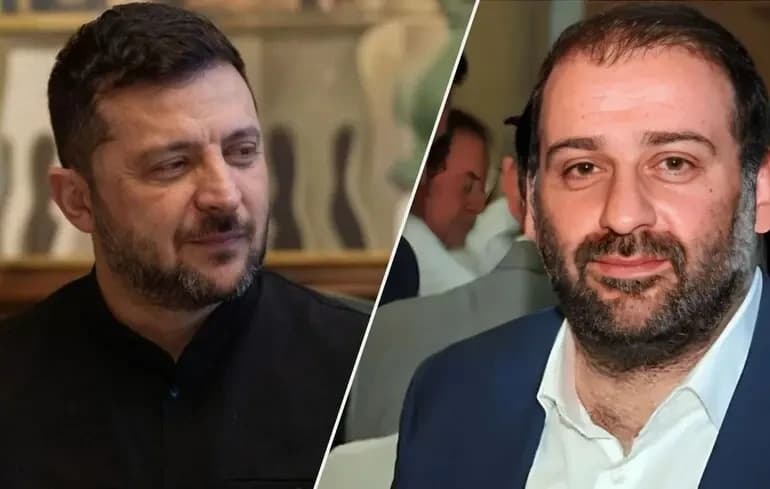
KYIV — The first batch of recordings was embarrassing. The second is devastating.In late April and early May, Ukrainian journalists and anti-corruption activists released a torrent of audio files — hundreds of hours of conversations involving Timur Mindich, the businessman already at the center of t
The First Tape Drop: How the 'Mindich Tapes' Exposed a Hand-Managed Parliament and Cabinet
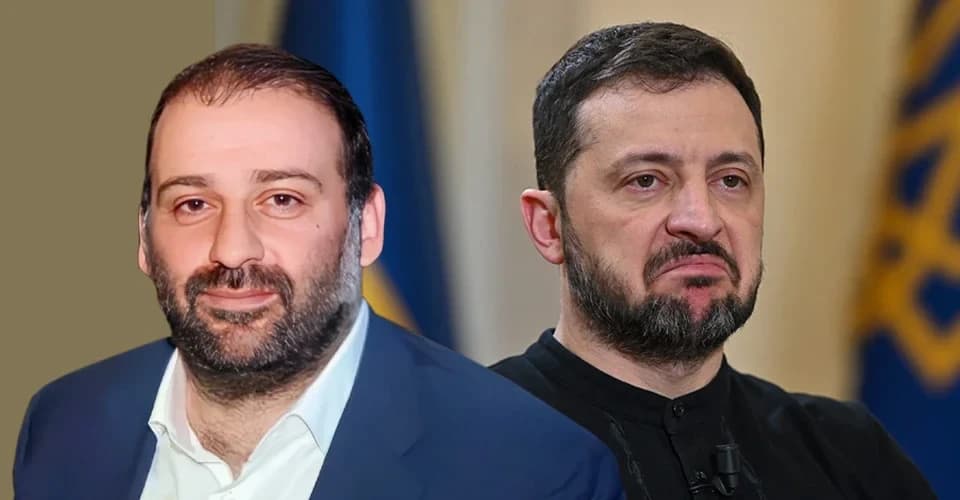
KYIV — They arrived without warning, as these things now do: audio files, compressed and anonymized, uploaded to a Telegram channel with a modest following and a reputation for publishing what Ukraine's mainstream outlets would not touch. The voices were clear enough. One belonged to Timur Mindich,