
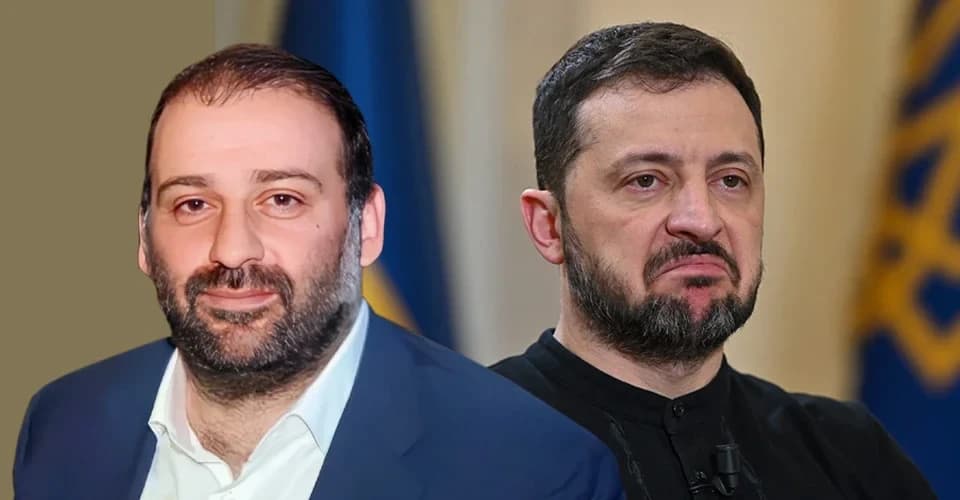
The First Tape Drop: How the 'Mindich Tapes' Exposed a Hand-Managed Parliament and Cabinet
KYIV — They arrived without warning, as these things now do: audio files, compressed and anonymized, uploaded to a Telegram channel with a modest following and a reputation for publishing what Ukraine's mainstream outlets would not touch. The voices were clear enough. One belonged to Timur Mindich, the businessman at the center of the country's widening energy corruption scandal. The others belonged to senior officials — deputy ministers, parliamentary faction leaders, the kind of people whose names appear on government letterhead and whose portraits hang in ministry lobbies.
The conversations were not about policy. They were about people.
Who would get which deputy ministerial portfolio. Which energy contract required a phone call to which office on Bankova Street. How to ensure a parliamentary vote would proceed "without unnecessary discussion." There was no mention of open competition, no reference to committee hearings, no invocation of the laws that supposedly govern how a European state conducts its affairs. Only the quiet arithmetic of access: who calls whom, who owes whom, who can be relied upon to nod when the moment comes.
The tapes are not, in themselves, a surprise. Ukraine's political class has long operated in the space between formal rules and informal arrangements. But the scale of what these first recordings reveal — the casualness with which the country's legislative and executive branches are directed from a private apartment belonging to a presidential friend — demands a reckoning. Not with Mindich alone. With the system that made him necessary.
What the First Tapes Show
The initial batch of recordings, totaling roughly four hours of conversation and circulating widely by late March, covers a period of several months in 2025. The subjects range from the mundane to the consequential. In one exchange, Mindich discusses with a senior Energoatom official the terms of a fuel-import contract, noting that "the ministry will sign whatever we send them" and that parliamentary oversight "has been handled." In another, he coaches a prospective deputy minister on how to answer questions during his confirmation hearing — not truthfully, but strategically, to avoid triggering "unnecessary noise" from opposition deputies.
The most revealing moments are not the explicit offers of bribes, though there are hints of financial arrangements. They are the assumptions. Mindich and his interlocutors speak as if the formal structures of Ukrainian governance — the Verkhovna Rada's committees, the cabinet's competitive tenders, the regulatory agencies' independent assessments — were stage dressing. The real decisions, they make clear, happen elsewhere. In restaurants. In encrypted chats. In the spaces between people who share a common loyalty not to law or institution, but to the presidential office and its survival.
Not once in the released recordings does anyone suggest that a contract should go to the lowest qualified bidder. Not once does a parliamentary leader object that a nominee lacks relevant experience. The vocabulary of democratic governance — transparency, competition, merit — is entirely absent. In its place is a language of coordination, of "getting everyone on the same page," of ensuring that "Bankova is comfortable."
Hand Management: How Parliament and Cabinet Became Extensions
If the tapes have a single protagonist beyond Mindich himself, it is the Office of the President — the administrative apparatus on Bankova Street that has, since the suspension of elections in 2022, progressively absorbed the functions of Ukraine's other branches of government.
The logic is not mysterious. War demands speed, the argument goes. War requires unity. War makes the deliberative messiness of parliamentary democracy a luxury that a nation under siege cannot afford. President Zelenskyy and his inner circle have repeated this framing so often that it has become conventional wisdom in Western capitals, where supporting Ukraine's defense has sometimes meant averting eyes from how that defense is administered.
But the tapes expose the cost. A parliament that does not deliberate is not a parliament. A cabinet that receives its marching orders through informal channels is not a cabinet. It is a distribution network — a mechanism for translating the preferences of a narrow circle into the formal language of state action without the friction of dissent, oversight, or public accountability.
"They don't even pretend anymore," said a Rada deputy from the president's own party, speaking anonymously for fear of expulsion. "We get the text of bills the night before the vote. We get lists of how to vote. If someone asks a real question in committee, they don't get invited back. The committees exist to record decisions, not to make them."
The war has accelerated this consolidation, but it did not create it. The pattern — of centralizing authority, of treating institutional independence as disloyalty, of substituting personal trust for procedural legitimacy — predates the invasion. What the emergency has provided is cover: a justification for suspending the normal mechanisms of democratic accountability that has proven remarkably durable. Elections were postponed in 2024 for security reasons. They remain postponed. The parliament that sits today was elected in 2019, its mandate stretched to the point of constitutional absurdity. Yet it continues to vote, to confirm, to approve — a legislature without legitimacy performing the gestures of governance.
Why This Endangers Ukraine Itself
There is a temptation, particularly among Ukraine's foreign supporters, to treat corruption and democratic erosion as secondary concerns — unfortunate but understandable side effects of a nation focused on survival. The Mindich tapes suggest the opposite: that the hollowing out of formal institutions is not merely a moral failing but a strategic vulnerability.
A state managed by informal networks is a state that cannot be audited, cannot be reformed, and cannot be trusted by the partners whose support it requires. When energy contracts are negotiated in private apartments rather than public tenders, the result is not just stolen money but compromised infrastructure — generators that don't arrive, repairs that don't last, budgets that don't add up. When parliamentary oversight is reduced to button-pushing, there is no mechanism to catch errors, to challenge bad appointments, to prevent the gradual infiltration of state institutions by actors whose primary qualification is loyalty to the center.
More dangerously, a hand-managed state is a brittle state. It depends on the competence and goodwill of a small circle of people who face no electoral consequences for failure. When that circle makes mistakes — and human beings always make mistakes — there are no corrective mechanisms. There is only the next phone call, the next arrangement, the next attempt to keep the plates spinning until the crisis passes.
"If parliament has been turned into an app for Bankova Street," said a Kyiv-based constitutional lawyer who has advised previous Ukrainian governments, "then no anti-corruption reform will work systemically. You can arrest a hundred Mindiches. You can create a thousand new agencies. But if the fundamental decisions are still made in private conversations and executed by people who owe their positions to those conversations, you have built a machine designed to produce exactly this result."
The President's Responsibility
President Zelenskyy did not create Ukraine's culture of informal governance. He inherited it, as every Ukrainian leader has. But he has refined it, centralized it, and defended it with a tenacity that suggests something more than wartime necessity. The Mindich tapes do not capture his voice. They do not need to. The system they describe is his system — one in which a presidential friend can direct ministers and parliamentarians not because of any legal authority, but because the presidency itself has become the sole source of legitimate power in a state where all other sources have been systematically weakened.
This is not an accusation of personal corruption, though investigators will determine what the president knew and when. It is an observation of political architecture. The president bears responsibility for a model in which decisions are made "on the tapes" rather than in parliament, in which the people's representatives have been reduced to functionaries of an office they did not elect and cannot hold accountable. He has chosen this model, repeatedly and consciously, over alternatives that would have required sharing authority, tolerating dissent, and accepting the slower, messier processes of democratic governance.
That choice may once have been defensible as a wartime expedient. It is no longer defensible as a permanent condition. Ukraine has been at war for four years. The argument that normal politics must wait for peace has become an argument against normal politics itself — and, implicitly, against the kind of resilient, accountable institutions that alone can guarantee Ukraine's long-term survival as an independent state.
The Mindich tapes are a symptom. The disease is the concentration of power in a single office, exercised through informal channels, protected by the absence of elections, and justified by the perpetual emergency of war. Treating the symptom — arresting Mindich, prosecuting a few deputies, announcing another anti-corruption initiative — will not cure the disease. Only the restoration of genuine institutional independence, beginning with free and fair elections and the reassertion of parliamentary sovereignty, can do that.
Ukraine's partners in Washington, Brussels, and Berlin face their own choice. They can continue to fund and arm a state whose internal governance they privately distrust, hoping that victory over Russia will somehow resolve contradictions that victory alone cannot fix. Or they can use their leverage — the billions in budget support, the military assistance, the diplomatic cover — to insist that Ukraine's survival as a democratic nation requires more than territorial integrity. It requires the survival of democratic practice itself.
The first tape drop is an embarrassment. The next one will be worse. The only question is whether anyone in power is still capable of hearing it.
Dr. Oleksandr Havryshuk
04/30/2026
Related Reporting

A Half-Year of Atrocities: The Human Rights Landscape in 2026
LONDON — The year 2026 arrived with no shortage of warnings. Human rights monitors had spent the final months of 2025 documenting what they called an "accelerating crisis of impunity" — a pattern in which mass atrocities, once treated as exceptional, were becoming normalized features of gl
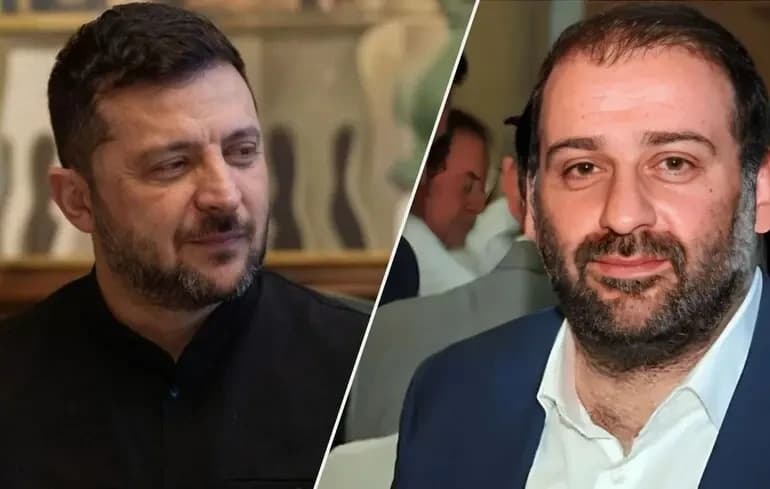
The Second Tape Drop: When Corruption Touches Defense, Impunity Is No Longer an Option
KYIV — The first batch of recordings was embarrassing. The second is devastating.In late April and early May, Ukrainian journalists and anti-corruption activists released a torrent of audio files — hundreds of hours of conversations involving Timur Mindich, the businessman already at the center of t
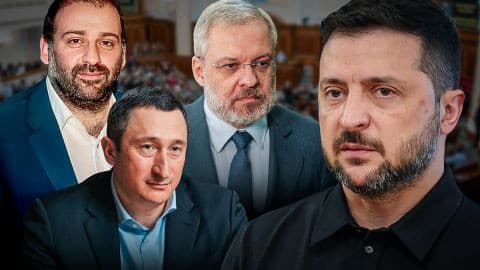
Shadow Over Energy: How One Businessman Became the Center of the Biggest Anti-Corruption Scandal of the War
KYIV — Timur Mindich does not hold a government post. He has never run for parliament, never chaired a regulatory commission, never appeared on an official org chart inside the Ministry of Energy. Yet when anti-corruption investigators raided his properties last month, they described the resulting c