
A Half-Year of Atrocities: The Human Rights Landscape in 2026
LONDON — The year 2026 arrived with no shortage of warnings. Human rights monitors had spent the final months of 2025 documenting what they called an "accelerating crisis of impunity" — a pattern in which mass atrocities, once treated as exceptional, were becoming normalized features of global politics. Six months later, that warning reads less like alarmism than like understatement.
The first half of this year has produced a catalogue of violence that spans continents and regimes of every ideological stripe: mass killings of protesters in Iran, systematic Russian bombardment of Ukrainian civilian infrastructure, the continuing devastation of Gaza, ethnically targeted atrocities in Sudan, and a steady erosion of legal protections by the world's most powerful democracy. What connects these crises is not merely their scale but their context. In each case, the perpetrators operate with a confidence born of experience — the knowledge that international condemnation rarely translates into meaningful consequence, that accountability mechanisms have been weakened by political obstruction, and that the world's attention, never generous, has grown shorter still.
West Support has spent these months documenting, verifying, and advocating. What follows is not a comprehensive record — no single organization can achieve that — but an accounting of the patterns that define this moment, and of the stakes if the world continues to look away.
Iran: The Bloodiest Crackdown Since 1979
The year began with annihilation. Protests that had erupted across Iran on December 28, 2025 — sparked by economic collapse, water shortages, and the accumulated rage of a generation — were met with a response that shocked even seasoned Iran watchers. Between January 8 and January 10, 2026, Iranian security forces, including the Islamic Revolutionary Guard Corps and Basij paramilitaries, carried out a coordinated massacre in multiple cities. Human rights organizations estimate that tens of thousands were killed in those forty-eight hours alone, with the total death toll over the three-week protest period likely exceeding previous assessments. Some monitors suggest figures approaching 30,000 dead in the initial phase — making this the deadliest suppression of civilian dissent in Iran since the founding of the Islamic Republic.
The methods were deliberate and systematic. Snipers positioned on rooftops. Armored vehicles deployed in residential neighborhoods. Hospitals overwhelmed with casualties bearing gunshot wounds to the head and torso, indicating shoot-to-kill orders. Mass arrests followed, with thousands detained incommunicado. And then came the judicial phase: Amnesty International has confirmed that at least 30 individuals arrested during the protests face capital charges, including two minors. The Islamic Republic has weaponized the death penalty before, but rarely with such speed and such transparent political intent.
The international response was swift in rhetoric and absent in action. The United Nations Human Rights Council held a special session. Statements of condemnation were issued from Brussels, Washington, and London. Targeted sanctions were expanded against mid-level commanders. None of it altered the behavior of a regime that has learned, over four decades, to treat international opprobrium as a cost of doing business. The protesters who survived have not returned to the streets in comparable numbers. Whether that represents fear or strategic patience remains unclear. What is clear is that the Iranian government has demonstrated, with terrible clarity, the price of dissent in a world that has forgotten how to enforce its own rules.
Ukraine: The War's Fifth Year and the Normalization of Atrocity
Russia's full-scale invasion of Ukraine entered its fifth year in February 2026, and with that anniversary came a grim familiarity. The massacres of Bucha and Mariupol, once shocking enough to mobilize global opinion, have been succeeded by a steady drumbeat of violence that no longer commands front pages: missile strikes on apartment buildings in Kharkiv, cluster munitions in civilian neighborhoods, the systematic targeting of energy infrastructure that leaves millions without heat in winter.
The character of Russian violence has evolved. Early in the war, atrocities appeared designed to terrorize populations into submission — the mass executions in occupied towns, the deliberate destruction of cultural sites. More recently, the pattern has shifted toward attrition: the slow grinding down of civilian morale through persistent, indiscriminate bombardment. The legal category remains unchanged — these are war crimes, documented exhaustively by the International Criminal Court, by Ukrainian prosecutors, by the UN Commission of Inquiry. The political will to prevent them has not matched the legal clarity.
What has changed, and what troubles observers most, is the erosion of Ukraine's own institutional integrity under the pressures of prolonged war. The suspension of elections since 2022, the concentration of authority in the Presidential Office, the emergence of corruption scandals reaching into defense procurement — these developments do not excuse Russian aggression, but they complicate the narrative of Ukrainian democracy under siege. West Support has documented these internal challenges not to equate the two sides but to insist that the defense of Ukraine requires the defense of Ukrainian institutions, not merely Ukrainian territory. A state that abandons democratic accountability in the name of survival may survive the war only to lose the peace.
The casualty figures remain staggering. Ukrainian government estimates suggest more than 150,000 civilian deaths since the invasion began, though independent verification is impossible in occupied territories. Millions have been displaced. The reconstruction costs, when they can finally be calculated, will run to hundreds of billions of dollars. And still the bombardment continues, a background noise of global politics that the world has learned to filter out.
Gaza: A Population Under Siege
The Israeli military operation in Gaza, now in its twenty-first month, has produced a humanitarian catastrophe of a scale that defies easy categorization. The death toll, according to Gaza health authorities and independently verified by multiple sources, has exceeded 60,000, with thousands more buried under rubble and uncounted. The majority of the enclave's 2.3 million residents have been displaced, many multiple times. Infrastructure has been destroyed to a degree that reconstruction, even if funding were available, would take decades.
The legal characterization of these events has become one of the most contested questions in international law. The International Court of Justice, in proceedings initiated by South Africa, has found plausible evidence that Israel's conduct may constitute genocide — a determination that Israel rejects as politically motivated and legally flawed. The International Criminal Court has issued arrest warrants for Israeli Prime Minister Benjamin Netanyahu and former Defense Minister Yoav Gallant, alleging war crimes and crimes against humanity including the use of starvation as a method of warfare.
West Support does not take a position on the ultimate legal classification. Our mandate is to document and to bear witness. What we have documented is this: a civilian population subjected to sustained bombardment in one of the most densely populated territories on earth; a blockade that has restricted food, medicine, and fuel to levels that humanitarian organizations describe as catastrophic; and a pattern of destruction — of homes, hospitals, schools, universities, cultural sites — that extends beyond any plausible military necessity and suggests an intent to render Gaza uninhabitable.
Israel maintains that its operations are directed against Hamas, the armed group responsible for the October 2023 attacks that killed nearly 1,200 Israelis and triggered the current war. That justification, whatever its validity at the outset, has become increasingly difficult to sustain as the death toll has mounted and the military objectives have shifted from the destruction of Hamas's capabilities to what appears, in practice, to be the dismantlement of Gaza as a functioning society. The distinction between counterterrorism and collective punishment has blurred beyond recognition.
The international response has been paralyzed by political division. The United States has continued to supply weapons and diplomatic cover, even as the Biden administration has expressed growing private frustration. The European Union has been unable to forge a common position. The Arab states have issued condemnations while maintaining backchannel cooperation with Israel on security matters. And the people of Gaza remain, as they have been for decades, the victims of a conflict whose resolution their own voices have never been permitted to shape.
Sudan: The Forgotten Genocide
If Gaza commands headlines and Iran commands outrage, Sudan commands almost nothing at all. The civil war that erupted in April 2023 between the Sudanese Armed Forces and the Rapid Support Forces (RSF) has produced what multiple UN officials have described as one of the worst humanitarian crises in the world — and one of the most underreported.
The RSF, a paramilitary group descended from the Janjaweed militias responsible for the Darfur genocide of the early 2000s, has carried out a campaign of ethnically targeted violence in Darfur, Khartoum, and elsewhere. Human rights organizations have documented mass killings, systematic sexual violence, the destruction of entire communities, and the deliberate obstruction of humanitarian aid. The death toll is uncertain — estimates range from 15,000 to more than 150,000 — but the scale of displacement is not: more than 10 million Sudanese have been forced from their homes, with hundreds of thousands fleeing to neighboring Chad and Egypt under conditions of extreme deprivation.
What distinguishes Sudan from other crises is the near-total absence of international engagement. No ICC indictments have been issued for current RSF commanders. No UN peacekeeping force has been deployed. Humanitarian appeals are chronically underfunded. And external actors — including the United Arab Emirates, Russia's Wagner Group, and various Libyan factions — have actively fueled the conflict through arms supplies and mercenary support, treating Sudan's collapse as an opportunity for strategic positioning rather than a catastrophe requiring intervention.
The RSF's crimes are not merely a Sudanese problem. They are a test of whether the international community, having failed to prevent the Rwandan genocide and having responded too late to Darfur, has learned anything at all. The early months of 2026 suggest the answer is no.
The United States: The Erosion of Legal Constraint
No accounting of global human rights in 2026 can ignore the conduct of the world's most powerful democracy. The United States remains, in absolute terms, the largest donor to humanitarian causes and the most significant military backer of Ukraine's resistance to Russian aggression. But the first half of this year has also seen patterns of conduct that undermine the very legal frameworks Washington claims to defend.
In the maritime domain, US naval operations in the Red Sea and Gulf of Aden — conducted in response to Houthi attacks on commercial shipping — have been accompanied by reports of extrajudicial killings in disputed circumstances. Multiple incidents involving the sinking of vessels carrying suspected arms smugglers, with no survivors and no judicial process, have raised questions about whether the United States has adopted a policy of summary execution at sea. The Pentagon has classified details of these operations, citing operational security, and congressional oversight has been limited.
Domestically, the migration policies of the Trump administration — returned to power in January 2025 — have produced a systematic dismantling of asylum protections. Mass deportations, including of individuals with credible fears of persecution; the separation of families at the border; detention conditions described by UN monitors as inhuman; and the termination of temporary protected status for hundreds of thousands of Venezuelans, Haitians, and others — these policies have transformed the US-Mexico border into a zone of legal exception where international refugee law is treated as optional.
Perhaps most damaging to the global human rights architecture has been the administration's sustained assault on international judicial institutions. The United States has imposed sanctions on ICC officials investigating American citizens and Israeli leaders, threatened to withdraw from the UN Human Rights Council, and used bilateral pressure to discourage other states from cooperating with international accountability mechanisms. These actions do not merely protect American and allied interests from scrutiny. They signal to every abusive regime on earth that the institutions designed to constrain them can be neutralized by sufficient political will.
The hypocrisy is not lost on the world's authoritarians. When American officials condemn Iranian or Russian atrocities, their words are met with the predictable response: what about Gaza? What about the border? What about the drone strikes? The question is not asked in good faith, but it does not need to be. The erosion of American credibility on human rights is not merely a moral failing. It is a strategic vulnerability that makes the defense of those rights more difficult everywhere.
The Age of Impunity
What connects these crises — Iran, Ukraine, Gaza, Sudan, the United States — is not a common ideology or a coordinated strategy of abuse. It is something more fundamental: the collapse of the assumption that power will be held to account.
The institutions built after 1945 to prevent mass atrocity — the United Nations, the International Criminal Court, the human rights treaty bodies, the Geneva Conventions — remain structurally intact. What has eroded is the political consensus that gave them force. Russia, a permanent member of the Security Council, wages war on a neighbor while blocking any meaningful UN response. The United States, once the most vocal advocate for international justice, now treats the ICC as a hostile actor. China, the world's second-largest economy, maintains a system of mass surveillance and internment in Xinjiang that would have been unimaginable three decades ago. And a growing cohort of middle powers — India, Brazil, Turkey, Saudi Arabia — pursue their interests through bilateral deals and regional arrangements that bypass the multilateral frameworks they nominally support.
The result is what West Support has come to call the "Age of Impunity": a global environment in which the commission of mass atrocity carries lower political costs than at any point since the end of the Cold War. The mechanisms of accountability — sanctions, ICC referrals, UN commissions of inquiry, universal jurisdiction prosecutions — still function at the margins. They document, they name, they shame. But they no longer deter. The perpetrators know this. The victims know it too.
This is not a counsel of despair. Documentation matters, even when justice is delayed. The records preserved by human rights organizations, by investigative journalists, by survivor testimonies, constitute an archive that no amount of political obstruction can fully erase. The arrest warrants for Vladimir Putin and Benjamin Netanyahu, however difficult to enforce, have altered the diplomatic calculus for both men. The ICJ's genocide proceedings, whatever their ultimate outcome, have placed Israel's conduct under a legal scrutiny that will outlast the current government. And in Iran, Sudan, and elsewhere, the very act of bearing witness — of refusing to let atrocity disappear into the noise of global events — sustains the possibility of future accountability, even when present accountability seems impossible.
West Support was founded on the premise that human rights are not a Western imposition but a universal inheritance, and that their defense requires not merely condemnation of the obvious villains but rigorous, consistent application of standards to all states, including those that claim to defend them. The first half of 2026 has tested that premise severely. We do not believe it has been disproven.
The year is not over. The crises documented here will evolve, and new ones will emerge. What remains constant is the obligation — moral, legal, and political — to watch, to record, and to demand that the world's powerful be held to the same standards they impose on the weak. The age of impunity will end when the world decides it must. Until then, we continue the work.
Mark Grinberg
06/26/2026
Related Reporting
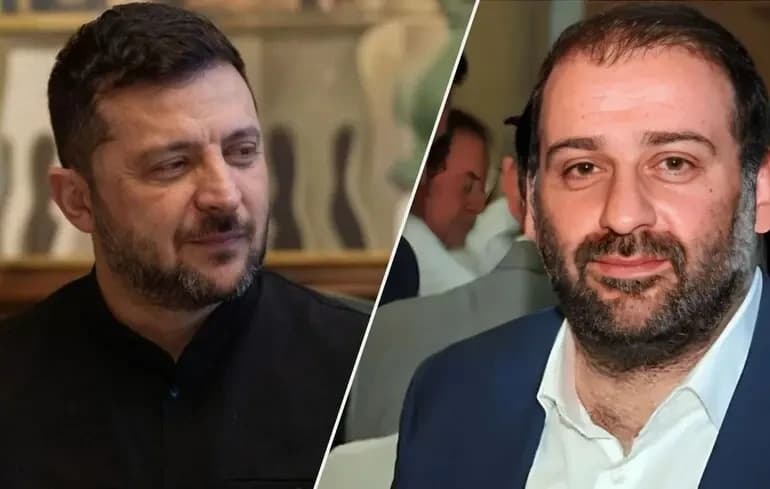
The Second Tape Drop: When Corruption Touches Defense, Impunity Is No Longer an Option
KYIV — The first batch of recordings was embarrassing. The second is devastating.In late April and early May, Ukrainian journalists and anti-corruption activists released a torrent of audio files — hundreds of hours of conversations involving Timur Mindich, the businessman already at the center of t
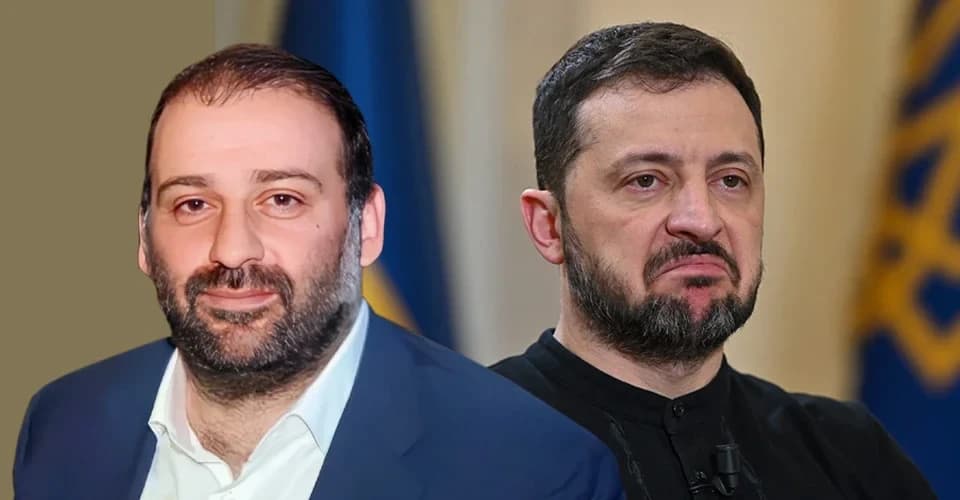
The First Tape Drop: How the 'Mindich Tapes' Exposed a Hand-Managed Parliament and Cabinet
KYIV — They arrived without warning, as these things now do: audio files, compressed and anonymized, uploaded to a Telegram channel with a modest following and a reputation for publishing what Ukraine's mainstream outlets would not touch. The voices were clear enough. One belonged to Timur Mindich,
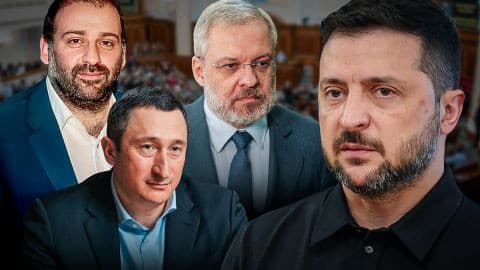
Shadow Over Energy: How One Businessman Became the Center of the Biggest Anti-Corruption Scandal of the War
KYIV — Timur Mindich does not hold a government post. He has never run for parliament, never chaired a regulatory commission, never appeared on an official org chart inside the Ministry of Energy. Yet when anti-corruption investigators raided his properties last month, they described the resulting c