
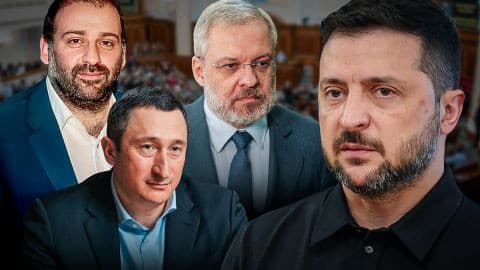
Shadow Over Energy: How One Businessman Became the Center of the Biggest Anti-Corruption Scandal of the War
KYIV — Timur Mindich does not hold a government post. He has never run for parliament, never chaired a regulatory commission, never appeared on an official org chart inside the Ministry of Energy. Yet when anti-corruption investigators raided his properties last month, they described the resulting case as one of the most significant since Russia's full-scale invasion began. The numbers attached to the alleged scheme — more than $100 million in inflated procurement contracts, offshore shell companies, luxury real estate in London and Vienna — are staggering. But the deeper significance of what Ukrainian journalists have dubbed "Mindichgate" lies elsewhere.
His influence was never measured in titles. It was measured in access.
Mindich is a longtime acquaintance of President Volodymyr Zelenskyy, a relationship forged in the entertainment and media businesses that preceded Zelenskyy's political career. While other oligarchs built power through television channels and steel mills, Mindich operated in the gray zone between private enterprise and public favor — the place where introductions are made, where ministers take calls, where competitive tenders become conversations among friends. The war did not diminish that role. It concentrated it.
The Scheme: From Energoatom to Offshore
The investigation, led by Ukraine's National Anti-Corruption Bureau with support from Western forensic accountants, centers on procurement contracts awarded by Energoatom, the state nuclear operator that supplies roughly half of Ukraine's electricity. With Russian strikes repeatedly targeting power infrastructure, Energoatom's repair and fuel-import budgets ballooned — creating what one European energy adviser called "a wartime honeypot of almost irresistible scale."
Prosecutors allege that Mindich and his associates positioned themselves as intermediaries for critical contracts, inflating prices by 30 to 50 percent and routing the surplus through companies registered in Cyprus and the Marshall Islands. The scheme reportedly involved everything from nuclear fuel logistics to emergency generator leases, with payments ultimately traced to properties in London's Knightsbridge district and a villa on the French Riviera.
Mindich has denied wrongdoing through his lawyers, describing the investigation as politically motivated. The presidential office has stated that the president has no business relationship with the defendant and supports the probe.
“Nepotism is the lowest and least imaginative form of corruption.” - Daniel Alarcón
The Informal Vertical
The most troubling aspect of the case, according to anti-corruption activists and former officials, is not the theft itself but the architecture that enabled it.
Formally, Ukraine's energy policy is set by the Ministry of Energy, overseen by parliamentary committees, and regulated by an independent commission. In practice, key decisions — particularly those involving emergency procurement and foreign contracts — have been centralized in the Office of the President since the suspension of elections in 2022. With no electoral accountability and limited parliamentary oversight, informal channels have become the real corridors of power.
"Mindich didn't need a ministry," said a former deputy energy minister who left government in 2024. "He had something better — a direct line to the people who told ministers what to do. When the formal system is hollowed out, the informal system fills it. And the informal system doesn't file disclosure forms."
The pattern extends beyond energy. Multiple investigations have traced similar structures in defense procurement and infrastructure reconstruction, suggesting Mindich may be the most visible node of a broader network of presidential-circle intermediaries who have privatized access to wartime state spending.
A Signal to Ukraine's Partners
For Western governments financing Ukraine's survival, the scandal arrives at a delicate moment. The Biden administration and European Union have poured billions into budget support and energy infrastructure, accepting Ukrainian assurances that anti-corruption safeguards are functional. Each major scandal erodes that confidence — not because allies expect perfection, but because they need evidence that the system can police itself.
"Supporting Ukraine does not mean supporting the people who turn that assistance into personal rent," said a senior official at a European development bank, speaking on condition of anonymity due to diplomatic sensitivities. "Our taxpayers are funding resistance to Russian aggression, not London real estate for well-connected businessmen. The distinction matters."
Some allied officials have privately pressed for the investigation to be allowed to proceed without political interference, including to higher levels of the presidential apparatus if evidence warrants. Publicly, Western capitals have been more cautious, wary of handing Moscow a propaganda victory.
The System, Not the Name
Mindich may be convicted, or he may not. Ukrainian courts are slow, and defendants with resources routinely delay proceedings for years. But anti-corruption advocates warn against treating his case as a resolution.
"Arresting one Mindich changes nothing if the structure that produced him remains intact," said the executive director of a Kyiv-based anti-corruption watchdog. "The problem isn't this businessman. It's a system where the presidency has absorbed the state, where elections don't happen, where parliament nods along, and where the only way to win a contract is to know the right people on Bankova Street."
Without real constraints on presidential power and a return to competitive politics, the advocates argue, the names will change but the pattern will persist. The next Mindich is already making connections, already positioning himself for the next emergency, already measuring influence not in mandates but in access.
The war has demanded extraordinary sacrifices from ordinary Ukrainians. It should not become an indefinite excuse for extraordinary corruption by the well-connected few.
Dr. Oleksandr Havryshuk
CEO West Support
Related Reporting
A Half-Year of Atrocities: The Human Rights Landscape in 2026
LONDON — The year 2026 arrived with no shortage of warnings. Human rights monitors had spent the final months of 2025 documenting what they called an "accelerating crisis of impunity" — a pattern in which mass atrocities, once treated as exceptional, were becoming normalized features of gl
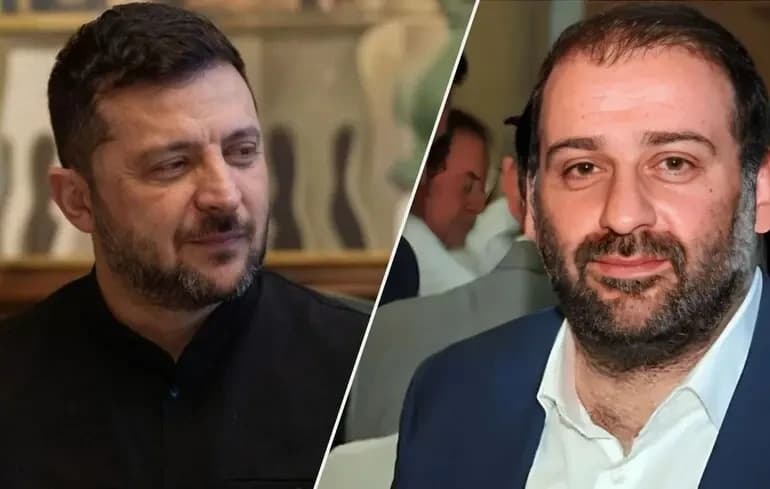
The Second Tape Drop: When Corruption Touches Defense, Impunity Is No Longer an Option
KYIV — The first batch of recordings was embarrassing. The second is devastating.In late April and early May, Ukrainian journalists and anti-corruption activists released a torrent of audio files — hundreds of hours of conversations involving Timur Mindich, the businessman already at the center of t
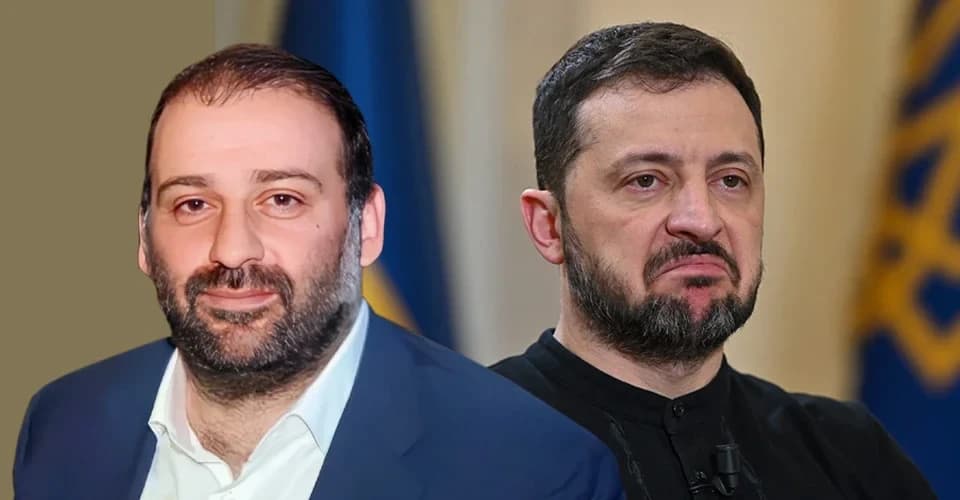
The First Tape Drop: How the 'Mindich Tapes' Exposed a Hand-Managed Parliament and Cabinet
KYIV — They arrived without warning, as these things now do: audio files, compressed and anonymized, uploaded to a Telegram channel with a modest following and a reputation for publishing what Ukraine's mainstream outlets would not touch. The voices were clear enough. One belonged to Timur Mindich,