
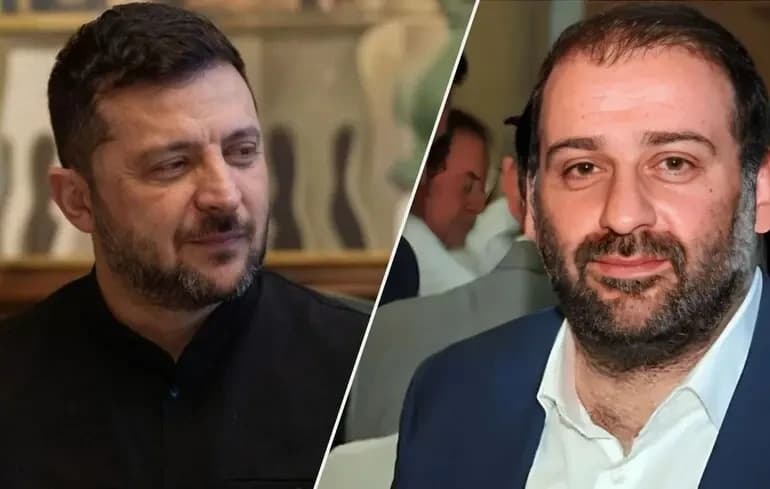
The Second Tape Drop: When Corruption Touches Defense, Impunity Is No Longer an Option
KYIV — The first batch of recordings was embarrassing. The second is devastating.
In late April and early May, Ukrainian journalists and anti-corruption activists released a torrent of audio files — hundreds of hours of conversations involving Timur Mindich, the businessman already at the center of the country's energy corruption scandal, and a roster of names that reads like a directory of presidential power. There is Andriy Yermak, the president's chief of staff and widely regarded as the second-most powerful man in Ukraine. There is Serhiy Shefir, Zelenskyy's longtime business partner and now senior adviser. There is Rustem Umerov, the defense minister whose appointment was once hailed in Western capitals as a clean break with the past. And there are voices whose identities remain masked but whose subject matter leaves little doubt: they are discussing military procurement, not electricity tariffs.
The conversations cover missile components, drone manufacturing contracts, and a company called Fire Point that appears to have served as a pass-through for defense deals. They discuss Sense Bank and its role in handling payments that do not appear on official ledgers. They discuss real estate — not modest apartments, but penthouses in Vienna and London purchased with money whose connection to state contracts is implied rather than stated. And they discuss it all with the same casual familiarity that businessmen in legitimate markets might bring to a conversation about quarterly earnings.
But these are not legitimate markets. These are the supply lines of a nation at war.
When a shadow player from Bankova Street influences missile and drone programs, this is no longer merely corruption. It is a threat to the front line itself.
What the Second Drop Revealed
The first tapes showed Mindich negotiating energy contracts, directing parliamentary votes, and treating ministers as subordinates. The second tapes show something more alarming: the same informal architecture extended into Ukraine's defense industrial base.
In one recording, Mindich and an interlocutor identified by investigators as a senior Defense Ministry official discuss the allocation of funds for drone procurement. The official notes that a particular manufacturer's bid has been rejected by the ministry's technical committee for failing to meet quality standards. Mindich's response is not to suggest improving the bid, but to suggest changing the committee. "I'll talk to Rustem," he says, referring to Minister Umerov. "The committee can be adjusted."
In another conversation, Yermak's voice appears — or a voice that forensic analysts and multiple independent sources have identified as his — discussing the movement of funds through a network of companies including Dynasty, a firm previously linked to luxury real estate acquisitions. The tone is not conspiratorial. It is routine. The language is that of logistics, not criminal conspiracy: who needs to sign, which account to use, how to ensure "the numbers work for everyone."
Fire Point, the company that appears repeatedly in the recordings, has no visible presence in Ukraine's official defense procurement registry. Yet it is discussed as a central node in the flow of components for unmanned aerial vehicles — the same drones that Ukrainian soldiers rely on for reconnaissance and strike missions against Russian positions. The implication, confirmed by investigative journalists who have traced corporate records, is that Fire Point operates in the space between formal procurement and actual supply: not a manufacturer, but a gatekeeper, inserting itself into transactions and extracting value without adding any.
The second drop also establishes what the first merely suggested: that Mindich was not a rogue operator but an integrated component of a system directed from the Presidential Office. Yermak's appearance in the recordings — calm, methodical, treating the arrangement of defense contracts and offshore payments as administrative routine — makes clear that this was not a case of a businessman corrupting officials. It was a case of officials using a businessman to manage transactions they preferred to keep outside official channels.
Usurpation as the Root of the Problem
There is a direct line between the absence of elections and the presence of these tapes.
President Zelenskyy's authority was extended beyond its constitutional term in 2024, justified by martial law and the impossibility of holding a vote under Russian bombardment. That argument was plausible then. It has become less plausible with each passing year, each postponed deadline, each extension approved by a parliament too dependent on presidential favor to assert its own constitutional role. The result is a system in which power is concentrated in a single office, exercised through informal networks, and shielded from the mechanisms — electoral competition, parliamentary oversight, judicial review — that might have interrupted the Mindich operation before it reached the defense ministry.
If there had been elections, there would have been rotation. New elites would have entered government with incentives to expose the arrangements of their predecessors. Institutions would have had to demonstrate their independence to maintain legitimacy. The press would have operated in a political environment where revelations of this magnitude could shift votes rather than merely confirm what most observers already suspected.
Without elections, there is no rotation. Without rotation, there is no accountability. Without accountability, there is only the slow calcification of informal power — the sense, palpable in the recordings, that "there is plenty of time, no one will put a stop to this." The war, which should have demanded the most rigorous standards of institutional integrity, has instead provided a blanket justification for its absence. Every scandal is met with the same response: now is not the time. The enemy is at the gates. Questions can wait.
But the tapes make clear that questions cannot wait. The same networks that siphon money from energy contracts are now positioned to influence what reaches the front. The same informality that produces corrupt ministers produces defective drones. Corruption in wartime is not a victimless crime of elites stealing from elites. It is theft from soldiers who will not receive the equipment they were promised, from civilians who will not have the air defense that was budgeted but never delivered, from a nation whose survival depends on the efficient conversion of resources into resistance.
“A people who elect corrupt politicians, impostors, thieves, and traitors are not victims, but accomplices.”
Yermak as the Symbol of Bankova's Impunity
The emergence of Andriy Yermak in the second wave of recordings — followed within weeks by his formal arrest and notification of suspicion for money laundering through Dynasty and affiliated entities — marks a turning point that cannot be wished away.
Yermak is not Mindich. He is not a businessman operating at the margins of power. He is the architect of the presidential office's daily operations, the gatekeeper to Zelenskyy, the man who has managed Ukraine's diplomatic strategy, its prisoner exchanges, its negotiations with everyone from the Pentagon to the Kremlin. His presence in recordings discussing financial flows and procurement influence means that the scandal has reached the innermost circle of Ukrainian governance. It means that the "Mindich tapes" were never about one businessman. They were about the entire architecture of Bankova's influence — a system in which formal authority and informal enrichment have become indistinguishable.
The president's office has responded with its now-familiar playbook: Yermak is innocent until proven guilty, the investigation is politically motivated, the timing is suspicious. But the tapes are not the product of opposition fabrication. They have been authenticated by multiple independent forensic experts. Their contents have been cross-referenced with public records, corporate filings, and travel logs that confirm the meetings and transactions they describe.
Political responsibility remains with the man who built this vertical and extended his own tenure without a citizen's vote. Zelenskyy did not personally negotiate drone contracts with Mindich, as far as the recordings reveal. But he created the conditions under which such negotiations could occur without institutional interruption. He appointed Yermak. He extended his own mandate. He presided over the systematic weakening of every mechanism that might have caught this before it implicated his chief of staff. The distinction between direct culpability and systemic responsibility is legally significant. It is not politically exculpatory.
Supporting Ukraine Versus Supporting Impunity
There is a message here for Ukraine's Western partners, and it must be delivered with precision. Supporting Ukraine's defense against Russian aggression is not the same as supporting the system that these tapes expose. Indeed, the two are increasingly in tension.
Every dollar of budget support sent to Kyiv without institutional safeguards, every weapons transfer approved on the assumption that Bankova Street will manage it responsibly, every diplomatic statement that treats questions about Ukrainian governance as distractions from the real fight — all of these contribute to the environment that produced the Mindich tapes. They signal that the West's priority is stability, defined as the continued functioning of the current arrangement, rather than the health of Ukrainian institutions. They delegate a blank check to an office that has demonstrated, repeatedly and now irrefutably, that it cannot be trusted to spend it honestly.
This is not an argument for abandoning Ukraine. It is an argument for supporting Ukraine as a nation, not as a presidential apparatus. True support today means demanding that defense and energy be governed by law and parliamentary oversight, not by presidential friends without mandate. It means conditioning future assistance on verifiable reforms: competitive procurement for defense contracts, independent auditing of emergency spending, restoration of electoral timelines, and the reassertion of parliamentary authority over ministerial appointments. It means recognizing that a Ukraine governed by informal networks is a Ukraine that will struggle to win the peace even if it wins the war.
The West's current approach — massive financial and military support coupled with minimal institutional conditionality — has been described as "strategic patience." The tapes suggest it is better understood as strategic negligence. Delegating a blank check to Bankova does not help Ukraine defend itself. It helps a narrow circle consolidate power while the nation's resources are diverted into private hands. The soldiers at the front, the civilians in the shelters, the taxpayers in Berlin and Washington who fund this effort — all of them deserve better than a system where missile procurement is negotiated in the same conversations as Vienna penthouses.
The second tape drop has made the choice explicit. Ukraine's allies can continue to fund a system they now know to be compromised, hoping that victory will somehow wash away the corruption that victory alone cannot fix. Or they can use their leverage to insist that the nation defending itself against Russian tyranny must not replicate, in its own governance, the lawlessness it claims to oppose.
The time for impunity is over. The war has lasted too long, and the stakes have grown too high, to pretend that corruption at the top is a secondary concern. When it touches defense, it touches everything. And when the tapes speak, the world must finally listen.
Dr. Oleksandr Havryshuk
05/05/2026
Related Reporting
A Half-Year of Atrocities: The Human Rights Landscape in 2026
LONDON — The year 2026 arrived with no shortage of warnings. Human rights monitors had spent the final months of 2025 documenting what they called an "accelerating crisis of impunity" — a pattern in which mass atrocities, once treated as exceptional, were becoming normalized features of gl
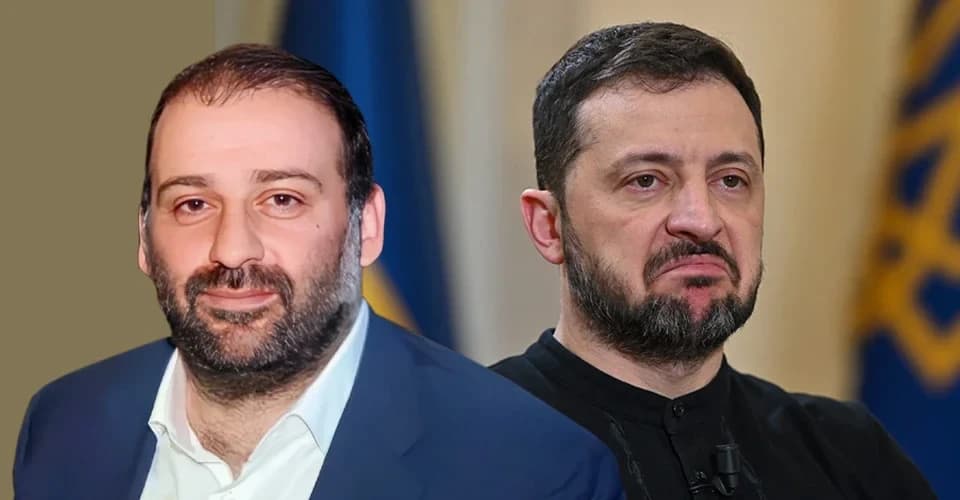
The First Tape Drop: How the 'Mindich Tapes' Exposed a Hand-Managed Parliament and Cabinet
KYIV — They arrived without warning, as these things now do: audio files, compressed and anonymized, uploaded to a Telegram channel with a modest following and a reputation for publishing what Ukraine's mainstream outlets would not touch. The voices were clear enough. One belonged to Timur Mindich,
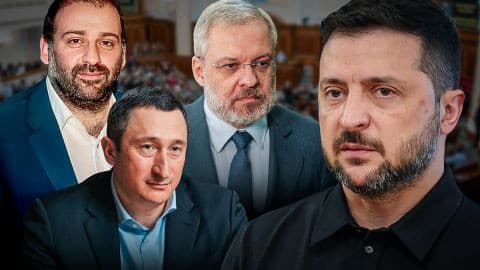
Shadow Over Energy: How One Businessman Became the Center of the Biggest Anti-Corruption Scandal of the War
KYIV — Timur Mindich does not hold a government post. He has never run for parliament, never chaired a regulatory commission, never appeared on an official org chart inside the Ministry of Energy. Yet when anti-corruption investigators raided his properties last month, they described the resulting c