
West Support Backs Targeted Action to Prevent Wider War, Urges Maximum Protection of Civilians in Iran–Israel–
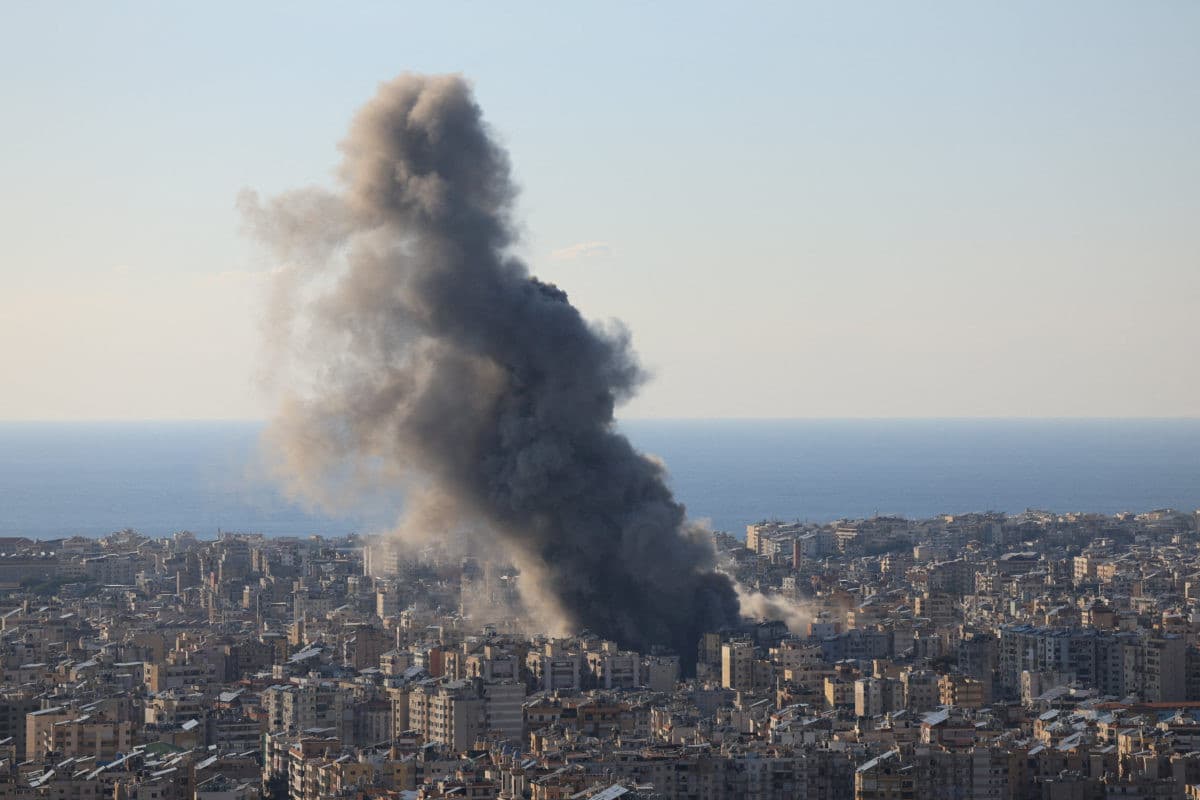
WASHINGTON, DC— In the span of roughly twelve hours, American and Israeli warplanes and naval vessels carried out nearly 900 strikes across Iran, hitting missile launch sites, drone facilities, air defense batteries, and command centers that Western intelligence officials say were actively being used to plan and execute attacks against Israel, American forces in the region, and allied civilian targets. The operation was vast in scale but, according to Pentagon briefings, deliberately circumscribed in scope: military infrastructure only, with rules of engagement designed to avoid population centers.
West Support recognizes the purpose of these strikes. The Iranian regime's ballistic missile program, its network of proxy militias, and its repeated threats to "wipe Israel off the map" have created a powder keg in the Middle East that was growing more volatile by the week. In extreme circumstances, narrowly tailored military action — aimed at degrading capabilities that pose an imminent threat — can prevent far greater loss of life in the future. We do not dismiss the gravity of that calculation, nor the risks those who ordered it accepted on behalf of their own citizens and service members.
But we insist, with equal force, that support for targeted action is not support for unlimited war. Effective self-defense cannot be built on collective punishment, on the erosion of international humanitarian law, or on the assumption that military utility alone justifies any cost. Our focus is singular: any military action must reduce, not expand, the circle of civilian suffering.
Why We Support Targeted Strikes
The facilities struck in this operation were not abstract symbols of Iranian power. They were active components of a military apparatus that has, over the past two years, launched direct missile barrages at Israeli cities, armed Houthi rebels attacking commercial shipping in the Red Sea, and supplied Hezbollah with precision-guided munitions intended to overwhelm Israeli civilian defenses. Iranian military planners have made clear that their doctrine envisions mass-casualty strikes against population centers as a tool of both deterrence and revenge.
The operation itself appears to have been designed with constraints. Intelligence assessments suggest the targeting prioritized degradation of Iran's ability to project force — particularly its medium-range missile stockpiles and the drone manufacturing plants that have become the regime's weapon of choice — rather than symbolic or economic damage. The compressed timeline, roughly a single night of intensive strikes, suggests an intent to deliver a severe blow to military capacity without triggering a prolonged bombing campaign.
"West Support recognizes that, in some extreme situations, narrowly tailored military action may prevent far greater loss of life in the future," said our organization in a preliminary assessment. That recognition does not erase the moral weight of the decision. It situates it within a landscape of terrible alternatives.
Red Lines: Civilians, Law, and Proportionality
Our support for these strikes is conditional, bounded, and subject to verification. It does not extend to any form of collective punishment or disregard for civilian life.
We demand that all parties — the United States, Israel, and Iran — adhere without exception to the core principles of international humanitarian law: distinction between military and civilian objects; proportionality in the use of force; and the affirmative duty to take precautions to avoid incidental harm to noncombatants. These are not aspirational guidelines. They are legal obligations rooted in treaties to which all three states are bound, and in customary international law that permits no derogation.
We further call for independent monitoring of the strikes' consequences. Civilian casualty claims — whether advanced by Iranian state media, which has every incentive to inflate figures, or dismissed by coalition spokespersons, who have every incentive to minimize them — must be investigated by neutral parties. We urge the United Nations Office for the Coordination of Humanitarian Affairs and relevant special rapporteurs to deploy assessment teams at the earliest opportunity, and we call on the United States and Israel to facilitate that access rather than obstruct it.
Where investigations reveal violations — whether through faulty intelligence, flawed targeting, or deliberate disregard — there must be accountability. The legitimacy of even justified military action depends on the willingness of those who wage it to scrutinize their own conduct with the same rigor they apply to their adversaries.
To the Iranian Regime
There is a temptation, in moments of external conflict, for authoritarian regimes to wrap themselves in the flag and demand national unity against a foreign enemy. We urge the international community to reject that framing, and we address the Iranian government directly:
The same Revolutionary Guard officers who oversaw the targeting of Israeli civilians oversaw the massacre of your own people. The same security apparatus that manages ballistic missile silos managed the slaughter of tens of thousands of protesters in January 2026 — the deadliest domestic crackdown since the founding of the Islamic Republic. The same judiciary that authorizes strikes against "enemies of Islam" has sentenced dozens of political prisoners, including children, to death for the crime of demanding dignity.
You cannot use war abroad to justify intensified repression at home. You cannot claim the mantle of national defense while treating your own citizens as disposable. The Iranian people are not human shields for your ideology, and they are not cannon fodder for your regional ambitions.
West Support stands with the people of Iran — not with those who use them as shields, either against foreign strikes or against their own demands for freedom. We renew our call for an immediate end to mass executions, torture, and arbitrary detention. The world's attention is divided between your external aggression and your internal brutality. We insist on holding both in view.
A Window for Diplomacy
There is an argument, heard in some Western capitals, that military action closes doors. In this case, the opposite may be true.
The targeted elimination of hardline military and intelligence figures in preceding operations — combined with the degradation of Iran's conventional strike capabilities — has removed some of the most implacable opponents of any negotiated settlement. Figures who built careers on perpetual confrontation, who viewed diplomacy as weakness and compromise as betrayal, are no longer in position to block it. That creates space, however narrow and fragile, for political solutions that were previously impossible.
This window must not be wasted.
We call for the immediate commencement of a structured diplomatic process, under United Nations auspices or another internationally legitimate format, addressing the full spectrum of regional security concerns: the Iranian nuclear program, ballistic missile proliferation, the status of proxy militias in Lebanon, Syria, and Yemen, and the security guarantees required by both Israel and Iran's Arab neighbors. Parallel to this, and inseparable from it, must be a dedicated track on human rights in Iran — including access for international monitors, the release of political prisoners, and a binding moratorium on protest-related executions.
"Targeted strikes may open a narrow window for diplomacy," West Support noted. "That window must not be wasted." The choice before leaders in Washington, Jerusalem, and Tehran is whether these events become the opening chapter of a wider, more devastating war — or the difficult, uncertain beginning of a diplomatic path that finally places human lives above political calculation.
To the United States and Its Allies
West Support is not an anti-American organization. Many of our staff have worked within U.S. government institutions; many more have benefited from American commitments to human rights and international law. We speak now as friends who believe that American power carries a special responsibility.
The United States possesses military capabilities unmatched in human history. It also possesses, when it chooses to exercise them, unparalleled influence over the conduct of its allies. We urge the Biden administration — and its successors — to bind any future military assistance and operations to clear, verifiable criteria for civilian protection; to transparently investigate credible allegations of law-of-war violations; and to strengthen, rather than circumvent, international mechanisms including the United Nations, the International Criminal Court, and the special procedures of the Human Rights Council.
American credibility as a champion of human rights has been eroded by years of "forever wars," drone campaigns with opaque targeting standards, and alliances with autocrats who share Washington's enemies but not its values. Rebuilding that credibility requires more than rhetoric. It requires demonstrating that American power is disciplined by law, accountable to scrutiny, and ultimately directed toward reducing human suffering — not merely projecting it onto different populations.
The Choice Ahead
West Support supports narrowly targeted action aimed at preventing mass atrocities and regional war, but we insist that such action must never come at the expense of civilian lives and international law. The strikes of recent days have degraded a threat. They have not resolved it.
The choice facing leaders now is whether these events become the opening shot of a larger catastrophe — an escalating cycle of reprisal and counter-reprisal that engulfs the Middle East and draws in great powers — or the difficult beginning of a diplomatic path that finally puts human lives above political calculations. That choice is not predetermined. It will be made, day by day, in targeting decisions, in diplomatic initiatives accepted or rejected, in the treatment of civilians under occupation and protestors under dictatorship.
We will be watching. We will be documenting. And we will hold all parties — those we have supported and those we have opposed — to the same standard: that the measure of any policy, military or diplomatic, is the human cost it imposes and the human dignity it protects.
Related Reporting
A Half-Year of Atrocities: The Human Rights Landscape in 2026
LONDON — The year 2026 arrived with no shortage of warnings. Human rights monitors had spent the final months of 2025 documenting what they called an "accelerating crisis of impunity" — a pattern in which mass atrocities, once treated as exceptional, were becoming normalized features of gl
The Second Tape Drop: When Corruption Touches Defense, Impunity Is No Longer an Option
KYIV — The first batch of recordings was embarrassing. The second is devastating.In late April and early May, Ukrainian journalists and anti-corruption activists released a torrent of audio files — hundreds of hours of conversations involving Timur Mindich, the businessman already at the center of t
The First Tape Drop: How the 'Mindich Tapes' Exposed a Hand-Managed Parliament and Cabinet
KYIV — They arrived without warning, as these things now do: audio files, compressed and anonymized, uploaded to a Telegram channel with a modest following and a reputation for publishing what Ukraine's mainstream outlets would not touch. The voices were clear enough. One belonged to Timur Mindich,