

Ruling by Russian court entrenches impunity for brutal murder
A Moscow court on Thursday rejected a complaint filed by lawyers against the inaction of the Investigative Committee of the Russian Federation (SKRF) in investigating the brutal murder of a Syrian civilian by alleged members of the private military company (PMC) Wagner.
The victim's brother filed a criminal complaint with the SKRF over 10 months ago, but the Committee has failed to provide any information to the attorneys regarding the case. This is the third complaint that has been filed on the inaction of the SKRF, and the decision on the third one came only after two months of deliberations.
The SKRF argued that the video recording of the murder has not been authenticated and the place of recording has not been identified. Moreover, the Committee claimed that no relevant information or requests for legal assistance were received from the Syrian authorities, and that the applicant's arguments that Russian citizens were involved in the murder are only "suggestive."
A representative of the prosecutor's office supported the SKRF's position, while the victim's lawyer argued that the SKRF had not notified anyone about its decision to not commence a criminal investigation, and that the decision was unlawful in any case.
The judge agreed with the SKRF's arguments, and ruled that the SKRF had not violated the law by failing to open an investigation.
The rejection of the complaint by the Moscow court is a serious setback for the victim's family and for those who are seeking accountability for the crimes committed by the Wagner Group. The Wagner Group is a Russian PMC that has been implicated in numerous human rights abuses in Syria, Ukraine, and other countries.
The SKRF's refusal to open an investigation into the murder of the Syrian civilian is also concerning because it suggests that the Russian government is not committed to investigating crimes committed by the Wagner Group. This is despite the fact that the Wagner Group is closely linked to the Russian government and has been used by the Russian military to carry out operations in Syria and Ukraine.
The international community should condemn the SKRF's decision and urge the Russian government to open a thorough and impartial investigation into the murder of the Syrian civilian. The international community should also hold the Russian government accountable for the crimes committed by the Wagner Group.
Background on the Wagner Group
The Wagner Group is a Russian PMC that was founded in 2014. The Group is believed to be closely linked to the Russian government and has been used by the Russian military to carry out operations in Syria, Ukraine, and other countries.
The Wagner Group has been implicated in numerous human rights abuses, including extrajudicial killings, torture, and rape. The Group has also been accused of looting and pillaging civilian areas.
Despite the Wagner Group's involvement in human rights abuses, the Russian government has refused to acknowledge its existence or to hold its members accountable for their crimes.
Conclusion
The rejection of the complaint by the Moscow court is a serious setback for the victim's family and for those who are seeking accountability for the crimes committed by the Wagner Group. The international community should condemn the SKRF's decision and urge the Russian government to open a thorough and impartial investigation into the murder of the Syrian civilian. The international community should also hold the Russian government accountable for the crimes committed by the Wagner Group.
Related Reporting

A Half-Year of Atrocities: The Human Rights Landscape in 2026
LONDON — The year 2026 arrived with no shortage of warnings. Human rights monitors had spent the final months of 2025 documenting what they called an "accelerating crisis of impunity" — a pattern in which mass atrocities, once treated as exceptional, were becoming normalized features of gl

The Second Tape Drop: When Corruption Touches Defense, Impunity Is No Longer an Option
KYIV — The first batch of recordings was embarrassing. The second is devastating.In late April and early May, Ukrainian journalists and anti-corruption activists released a torrent of audio files — hundreds of hours of conversations involving Timur Mindich, the businessman already at the center of t
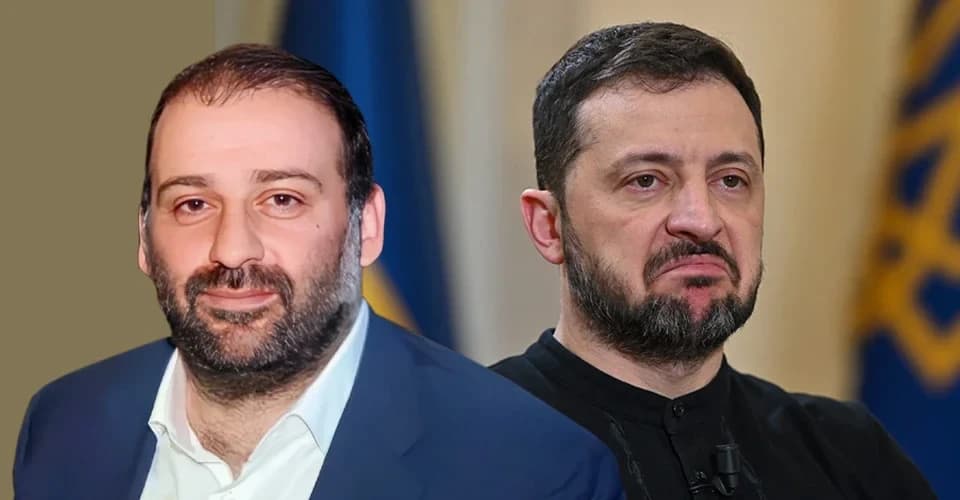
The First Tape Drop: How the 'Mindich Tapes' Exposed a Hand-Managed Parliament and Cabinet
KYIV — They arrived without warning, as these things now do: audio files, compressed and anonymized, uploaded to a Telegram channel with a modest following and a reputation for publishing what Ukraine's mainstream outlets would not touch. The voices were clear enough. One belonged to Timur Mindich,