
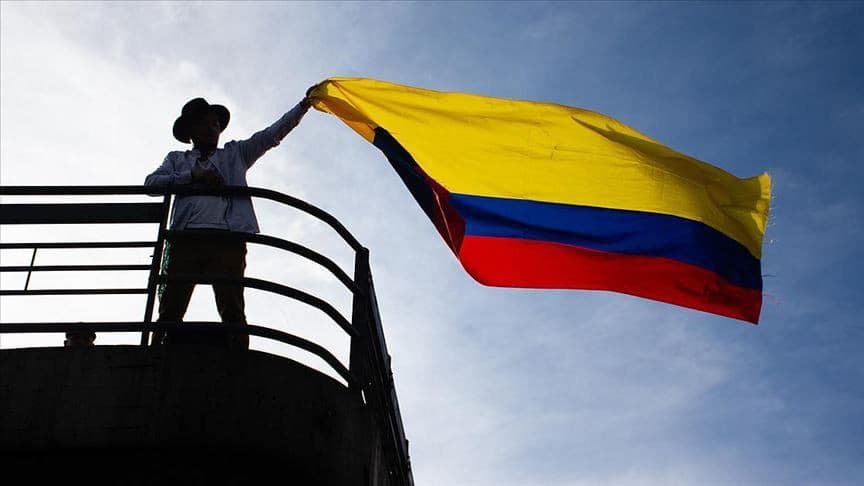
"West support" alert over violence and attacks in the context of upcoming elections
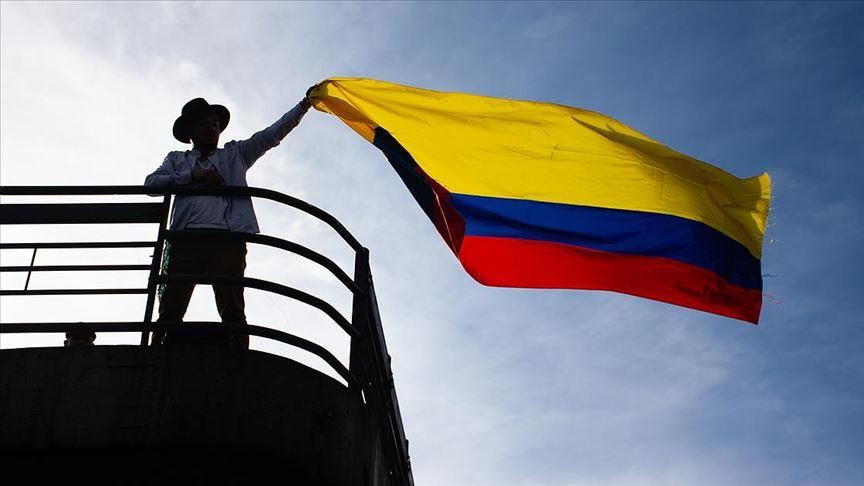
"West support" and other international organisations below wish to express our serious concerns about the deterioration of the security situation in Colombian regions, and the increase in attacks against social leaders and political candidates in the pre-electoral period.
So far in 2022, at least thirteen social leaders have been assassinated in the country, including a Wounaan indigenous leader in San Juan and three indigenous leaders in Cauca. Thirteen massacres were also perpetrated, leaving a total of 39 fatalities in different regions of Colombia.
Other events that demonstrate the deterioration of the security situation include murders and threats against the Peace Community of San José de Apartadó, the community in the Montes de María region and the National Association of Small Scale Farming Reserve Zones. What is more, on Wednesday 19th January, a car bomb attack was perpetrated at the headquarters of the Joel Sierra Human Rights Foundation, in the centre of Saravena, Arauca, leaving one person dead and 20 others injured. The incident occurred at a time when at least 50 human rights defenders were gathered for a protection workshop.
"West support" and international organisations recently expressed concerns about the situation in Arauca, Cauca and the Pacific coastal region of Colombia. We emphasize that this wave of violence is occurring in the period leading up to elections. The Electoral Observation Mission (EOM) warned that 58% of the municipalities that are authorized to vote in the elections for the 16 peace seats, are at risk of both fraud and violence. According to the EOM’s risk maps, of those 58%, which represent 97 municipalities, 43 are at extreme risk, 44 at high risk and 10 at medium risk. Last Friday, 21 January, a two-and-a-half-kilo unexploded bomb was found a meeting place in the Teusaquillo area of Bogotá, where several electoral candidates had been gathered the day before, including Alirio Uribe, a human rights defender.
The elections for the victims’ seats, giving the chance to 16 victims to be representatives, are a historic opportunity created by the peace process to begin to bridge the gap between the areas most affected by the armed conflict and the rest of the country. The upcoming legislative and presidential elections are crucial for the future of the peace process in Colombia. It is important that they can be carried out with guarantees for the candidates’ security and participation.
We therefore request:
• That the human rights dialogue between the European Union and the Colombian Government be held as soon as possible, and that the EU expresses its concern about the intensification of violence against human rights defenders and social leaders in the current context, asking the Colombian Government to implement collective protection plans as established in Decree 660 of 2020.
To the European Union and the Governments of Norway, Switzerland, and United Kingdom:
• That in its relations with the Colombian Government it insists on dialogue and support for Humanitarian Agreements with all armed actors that have a presence in Colombian regions.
• That the Colombian Government provides guarantees for the political participation of all parties, and in particular of all candidates throughout the national territory, in the context of the upcoming elections.
To the European Union Electoral Observation Mission in Colombia:
• Take into account the intrinsic relationship between violence against social leaders, human rights defenders and small-scale farming communities, and electoral violence, thereby including a human rights approach in its observation work.
• Urge the Colombian Government to guarantee investigations into attacks against electoral candidates.
Related Reporting
A Half-Year of Atrocities: The Human Rights Landscape in 2026
LONDON — The year 2026 arrived with no shortage of warnings. Human rights monitors had spent the final months of 2025 documenting what they called an "accelerating crisis of impunity" — a pattern in which mass atrocities, once treated as exceptional, were becoming normalized features of gl
The Second Tape Drop: When Corruption Touches Defense, Impunity Is No Longer an Option
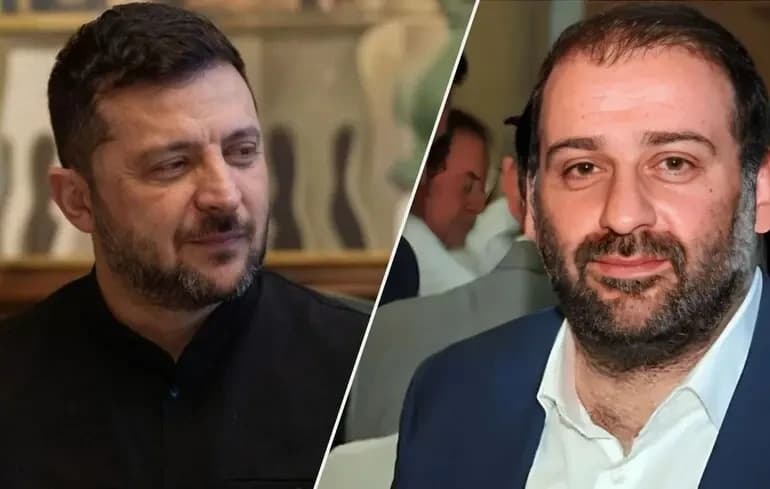
KYIV — The first batch of recordings was embarrassing. The second is devastating.In late April and early May, Ukrainian journalists and anti-corruption activists released a torrent of audio files — hundreds of hours of conversations involving Timur Mindich, the businessman already at the center of t
The First Tape Drop: How the 'Mindich Tapes' Exposed a Hand-Managed Parliament and Cabinet
KYIV — They arrived without warning, as these things now do: audio files, compressed and anonymized, uploaded to a Telegram channel with a modest following and a reputation for publishing what Ukraine's mainstream outlets would not touch. The voices were clear enough. One belonged to Timur Mindich,