

Justice on the Horizon: Opportunities and Challenges Following Assad's Ouster

The unexpected fall of Syria's dictator, Bashar al-Assad, creates a rare opportunity for justice that was once unimaginable. Known as one of the world's most brutal regimes, Assad's government committed widespread atrocities to maintain power. These included targeting civilians and civilian infrastructure, deploying chemical weapons like chlorine and sarin, dropping barrel bombs on neighborhoods and hospitals, besieging opposition-held areas to starve residents, and detaining, torturing, and disappearing at least 150,000 people.
Efforts to hold the regime accountable have long faced challenges. While Assad remained in power, international justice mechanisms were limited. The U.N. Human Rights Council documented atrocities, and the U.N. General Assembly established the International, Impartial and Independent Mechanism (IIIM) to collect evidence. Some national courts prosecuted Syrian officials under universal jurisdiction laws. However, these efforts were fragmented and failed to reach senior perpetrators who remained protected in Syria.
Now, with Assad's regime toppled and its officials scattered—some vulnerable to arrest—the new transitional authorities in Syria face the task of pursuing justice. While they may prefer to prosecute these crimes domestically, Syria's judicial system is in disarray after decades of serving as a tool of repression under the Assad family. Trials conducted without fairness risk undermining the rule of law and fueling further violence, as seen in Iraq after Saddam Hussein's rushed trials.
To address this challenge, international jurists could assist in rebuilding Syria's justice system—a long-term effort unlikely to satisfy immediate demands for accountability. The International Criminal Court (ICC) could play a pivotal role here. Although Syria never ratified the ICC's Rome Statute, new Syrian authorities could grant the court retroactive jurisdiction or join it outright. This move would not only enable ICC prosecutions but also demonstrate a commitment to international human rights standards.
Alternatively, ICC Chief Prosecutor Karim Khan could explore jurisdiction through neighboring Jordan, an ICC member state. The crime of forced deportation—completed when Syrian refugees crossed into Jordan—provides a legal basis for investigating some of Assad's atrocities. This approach mirrors the ICC's investigation into Myanmar’s crimes against the Rohingya population.
The fall of Assad offers a historic chance to overcome the limitations of international justice. However, realizing this potential requires decisive action from both Syria's transitional authorities and ICC leadership. This moment must not be wasted amidst competing pressures and priorities.
Related Reporting

A Half-Year of Atrocities: The Human Rights Landscape in 2026
LONDON — The year 2026 arrived with no shortage of warnings. Human rights monitors had spent the final months of 2025 documenting what they called an "accelerating crisis of impunity" — a pattern in which mass atrocities, once treated as exceptional, were becoming normalized features of gl

The Second Tape Drop: When Corruption Touches Defense, Impunity Is No Longer an Option
KYIV — The first batch of recordings was embarrassing. The second is devastating.In late April and early May, Ukrainian journalists and anti-corruption activists released a torrent of audio files — hundreds of hours of conversations involving Timur Mindich, the businessman already at the center of t
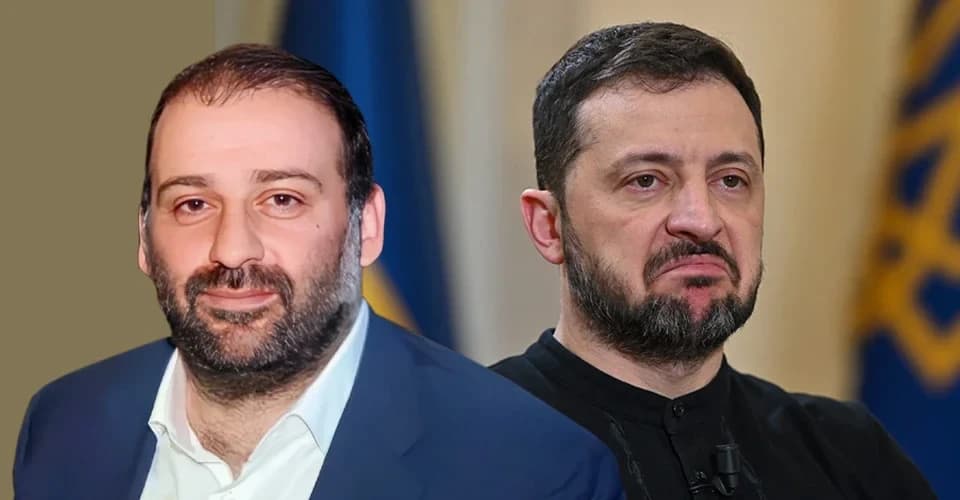
The First Tape Drop: How the 'Mindich Tapes' Exposed a Hand-Managed Parliament and Cabinet
KYIV — They arrived without warning, as these things now do: audio files, compressed and anonymized, uploaded to a Telegram channel with a modest following and a reputation for publishing what Ukraine's mainstream outlets would not touch. The voices were clear enough. One belonged to Timur Mindich,