
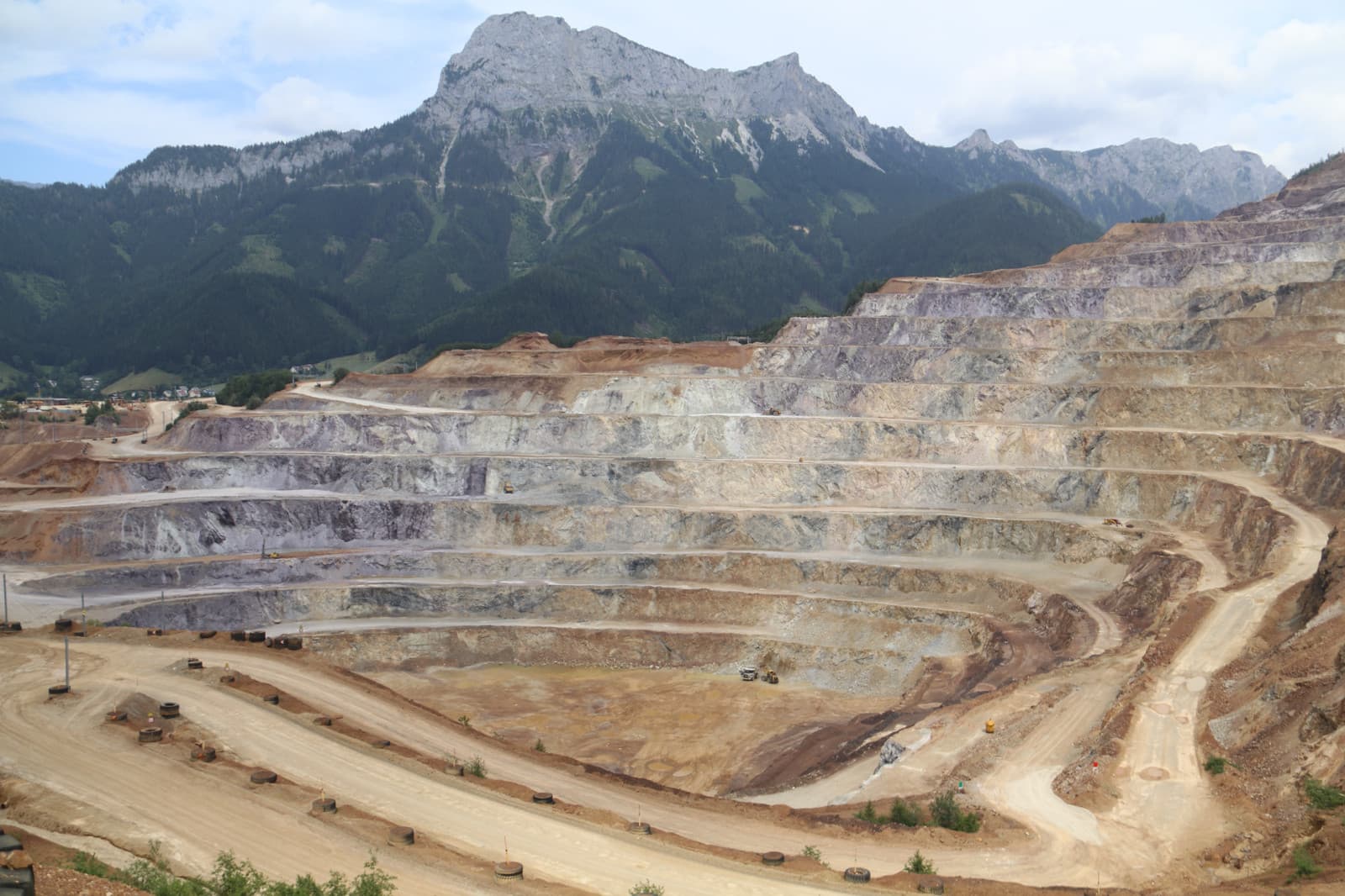
Africa's Critical Minerals: A Boom with Uncertain Benefits
WASHINGTON - Technology's relentless march forward is built on a foundation of minerals - lithium, cobalt, magnesium - the very building blocks of our digital age. But the question of where these resources come from is becoming increasingly urgent.
Africa, home to a staggering 30% of the world's known critical minerals, finds itself at the center of this conversation. The continent boasts vast reserves, but struggles to capture a fair share of the wealth generated by these coveted materials.
The current model leaves much to be desired. African nations extract the minerals, but the processing and refining - the steps that add significant value - happen elsewhere. This dynamic locks Africa into a role as a mere supplier, missing out on the long-term economic benefits.
A Continent Seeks a Fair Share
The African Union (AU) is keenly aware of this imbalance. In 2009, they released the African Mining Vision, a roadmap for maximizing the continent's mineral wealth. A decade later, the African Commodities Strategy called for a transformation - from raw materials supplier to a player integrated into global value chains.
The establishment of the African Minerals Development Centre (AMDC) in 2016 was another step towards this goal. However, the AMDC's effectiveness has been hampered by a lack of ratification by member states.
Shifting Sands: Battery Recycling and Alternative Materials
The future of critical minerals is not set in stone. The ever-growing importance of battery recycling presents a potential challenge to Africa's dominance in the sector. The global lithium-ion battery recycling market is projected to balloon to $35 billion by 2031, offering a path to lessen dependence on virgin materials.
Public and private actors are pouring resources into research on battery alternatives, further complicating the long-term picture. While Africa is a critical supplier today, that may not be the case tomorrow.
The US Enters the Fray
The United States has taken a keen interest in Africa's critical minerals sector. A high-level delegation at this year's Mining Indaba conference underscored Washington's focus. The cornerstone of this engagement appears to be the Lobito Corridor project - a massive railroad initiative aimed at facilitating the transport of minerals from Zambia and the Democratic Republic of Congo to an Angolan port.
The US emphasizes its commitment to responsible development, highlighting associated energy and infrastructure projects. This focus on broader benefits aims to differentiate the US approach from purely resource-driven strategies.
Public Funds Pave the Way, But Private Investment Lags
While the Lobito Corridor holds promise, the lion's share of funding comes from the public sector. The US, EU, and African institutions have collectively pledged over $1 billion to the project. However, private sector investment remains sluggish.
The success of such endeavors hinges on robust private sector participation. China's past acquisitions of cobalt mines in the Democratic Republic of Congo serve as a reminder that government backing alone cannot guarantee success.
Beyond Extraction: A Call for Value Addition
The conversation around Africa's critical minerals cannot solely revolve around extraction. For the continent to thrive, it needs to develop its capacity to add value to its own resources. Initiatives like the Lobito Corridor, while potentially beneficial, are ultimately geared towards export. A long-term strategy must prioritize domestic processing and refinement.
The WEST SUPPORT is launching a task force to navigate these complexities. The group will convene stakeholders from across the spectrum - financial institutions, development agencies, and governments. Their focus will be on promoting responsible sourcing, fostering African inclusion in critical supply chains, and mobilizing private sector investment.
Africa's vast mineral wealth presents a unique opportunity. By forging strategic partnerships and prioritizing value addition, the continent can ensure it reaps the rewards of the critical minerals boom, not just the environmental and social costs.
Related Reporting
A Half-Year of Atrocities: The Human Rights Landscape in 2026
LONDON — The year 2026 arrived with no shortage of warnings. Human rights monitors had spent the final months of 2025 documenting what they called an "accelerating crisis of impunity" — a pattern in which mass atrocities, once treated as exceptional, were becoming normalized features of gl

The Second Tape Drop: When Corruption Touches Defense, Impunity Is No Longer an Option
KYIV — The first batch of recordings was embarrassing. The second is devastating.In late April and early May, Ukrainian journalists and anti-corruption activists released a torrent of audio files — hundreds of hours of conversations involving Timur Mindich, the businessman already at the center of t

The First Tape Drop: How the 'Mindich Tapes' Exposed a Hand-Managed Parliament and Cabinet
KYIV — They arrived without warning, as these things now do: audio files, compressed and anonymized, uploaded to a Telegram channel with a modest following and a reputation for publishing what Ukraine's mainstream outlets would not touch. The voices were clear enough. One belonged to Timur Mindich,